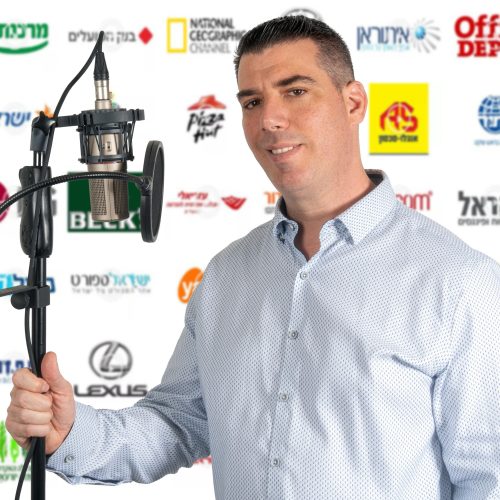



Can Anyone Become a Voice-Over Artist?
Many colleges and voice-over schools promote the idea that you can study voice-over, enter a desirable profession, earn solid income, and get paid to do something you enjoy — reading text clearly and fluently into a microphone. Sounds great, right?
But can everyone really become a voice-over artist?
To answer that, let’s first define the profession and understand what voice-over really is, so we can shed some light on the subject.
What Is a Voice-Over Artist?
A voice-over artist, unlike a broadcaster, is someone who reads a pre-written script into a microphone with the goal of delivering the message as clearly and effectively as possible to the listener. Not every message needs to be delivered in a sales-driven, formal, or even deep authoritative tone — the kind often associated with traditional voice-over.
Many scripts require different approaches, and sometimes a light, natural delivery — one that almost feels like it wasn’t recorded by a “professional voice-over artist” — can be far more suitable than a deep, commanding voice.
If I don’t have a deep, “radio-style” voice, can I still work as a voice-over artist?
I’ve been asked this question many times, and the answer is yes — but…
A voice-over artist must be professional in all the areas surrounding the field and deliver an excellent recording to the client. To do that, they need a holistic understanding of voice-over: proper recording technique, knowledge of suitable equipment, sound editing, recording software, correct language usage, connection to the message, and excellent customer service.
Once we master all of these, we need to understand what vocal tone suits us best. Are we versatile? Can we perform vocally and handle a wide range of tones and characters? In many scripts, clients are actually looking for people who can truly perform in front of a microphone — not necessarily those with deep, traditional announcer voices.
That said, the narration must always be clear, accurate, and aligned with the intended message. Almost anyone with acting ability has the potential to work in voice-over. Of course, a voice-over artist depends on being chosen by clients, and not every project will seek a “regular” sounding voice. However, you might be surprised at how many projects specifically look for voices that sound natural — just like everyone else — yet still know how to deliver the message properly.
In addition
Voice-over is a fascinating but demanding profession that requires far more than just a pleasant or deep voice. There is often a misconception that anyone with a nice voice can become a voice-over artist, but the reality is much more complex. Professional voice-over combines communication skills, text comprehension, expressive versatility, and proper use of vocal techniques — abilities that only a few are able to develop and master at the high level required.
Text Comprehension and Interpretation Skills
A voice-over artist does not simply “read” a text. Their role is to convey the meaning, emotion, and intention behind the words. They serve as a bridge between the content and the listener, and must fully understand the script, its context, and how to reflect that through tone, intonation, and pacing.
For example, a news narrator must maintain a serious and balanced tone, while in commercials or children’s audiobooks, the voice-over artist needs to adjust their tone to deliver the message in a more engaging and emotional way.
Ability to Use Vocal Techniques
To be a strong voice-over artist, full control over the voice is essential. There is a difference between having a pleasant voice and knowing how to use it properly and effectively. A professional voice-over artist must know how to control pitch, breathing, and diaphragm support in order to produce a clean, clear, and pleasant sound over extended periods of time.
In addition, they must master pacing and diction (proper pronunciation) so that the message is delivered clearly and without tiring the listener.
Flexibility and Adaptability
A professional voice-over artist must be flexible and able to adapt their delivery style to different types of content. They may record a commercial that requires a persuasive and energetic tone, and shortly afterward narrate an audiobook in a calm and steady voice.
This level of flexibility requires knowledge and experience in understanding industry demands, as well as the ability to adjust to different styles and techniques while maintaining vocal consistency.
Handling Unexpected Situations
Voice-over artists often encounter unexpected situations, such as scripts with errors, complex phrases, or technical issues during recording. Handling these situations smoothly requires experience and strong improvisation skills.
An experienced voice-over artist knows how to manage difficult texts or high-pressure moments while maintaining a high and consistent level of performance quality.
Patience and Commitment
Like any skill-based profession, voice-over requires time and dedication. It’s not enough to simply have a pleasant voice; you must invest in training, learn advanced techniques, and continuously improve your abilities. In addition, the work can be demanding — repeated recordings, long sessions, and multiple takes require patience and strong commitment to the process.
In Summary
Voice-over is a profession that requires more than just a pleasant voice — it demands deep understanding of the text, technical control of the voice, expressive flexibility, and the ability to adapt to the needs of each project. Only those who successfully combine all of these elements can become professional and successful voice-over artists.
If the world of voice-over truly excites you, try it. Don’t let background noise or outside opinions stop you from giving it a chance. Study the field, connect with the tone or tones that suit you best, practice performing in front of a microphone, build real understanding, and take action.
If you don’t try, you will certainly fail. If you try, you might succeed.
When I first started working as a voice-over artist, I heard a lot of background noise. Many friends raised an eyebrow and thought I was wasting my time. I studied, researched, and developed my skills. I built a portfolio and didn’t give up.
Today, after many years in the industry, I can say that the effort was absolutely worth it and paid off.